A zero proof drink should not arrive with the emotional energy of an apology.
Not in a serious room.
Not in 2026.
Not when the guest has already told you something useful: I am here. I am spending. I care about the experience. I do not want alcohol in the glass.
That is not a problem.
That is a brief.
The industry keeps treating zero proof like a side quest. A soda with garnish. A lemonade that went to finishing school. A list item written in the voice of someone who does not believe the guest will order it.
Meanwhile, the room has changed.
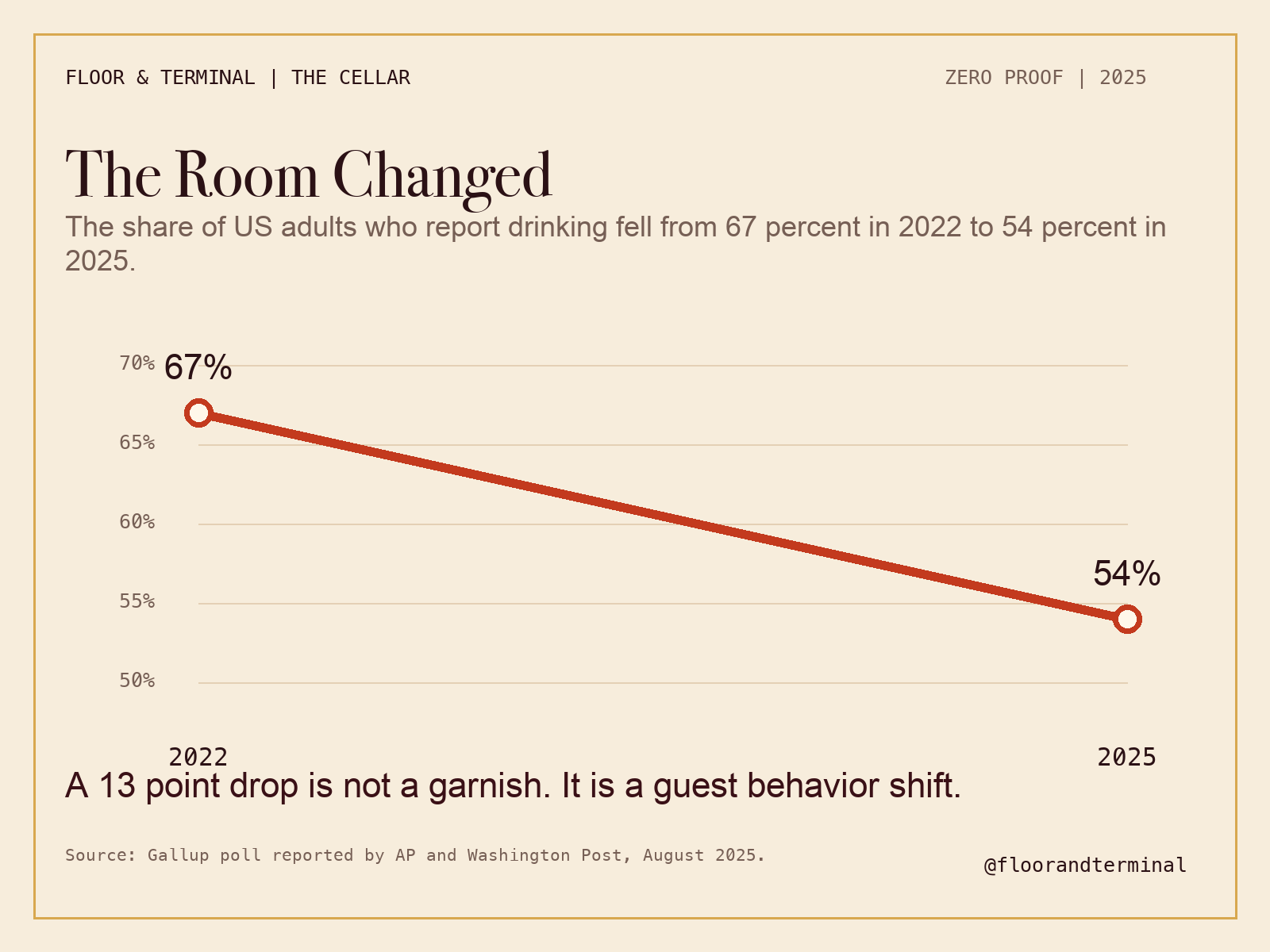
In 2025, Gallup found that 54 percent of US adults reported drinking alcohol. That is the lowest level in Gallup tracking since 1939, and down 13 points from 2022.
This is not a niche.
This is not only recovery.
This is not only wellness.
This is the market telling the dining room that the old beverage script is losing coverage.
The lazy response is to panic about alcohol sales.
The operator response is to protect the check without insulting the guest.
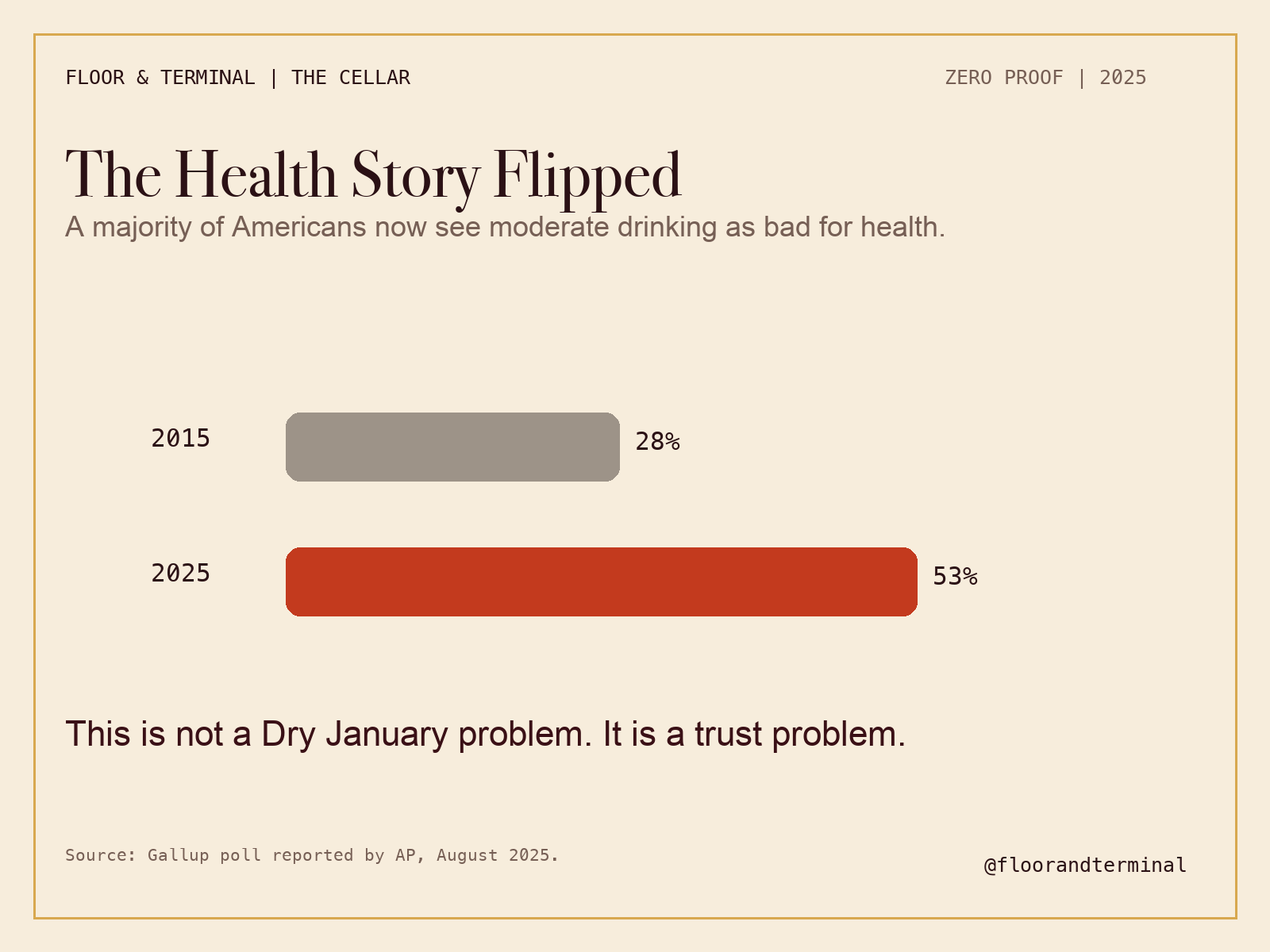
The health story has moved faster than most wine lists.
AP reported Gallup data showing that 53 percent of Americans now say moderate drinking is bad for health. In 2015, that number was 28 percent.
You can argue with the mood if you want.
The guest has already changed the order.
This is where restaurants get weird. They will spend twelve minutes describing the texture of a white asparagus supplement, then hand the sober guest a list that sounds like a punishment for making eye contact with their own life.
That is not hospitality.
That is leakage.
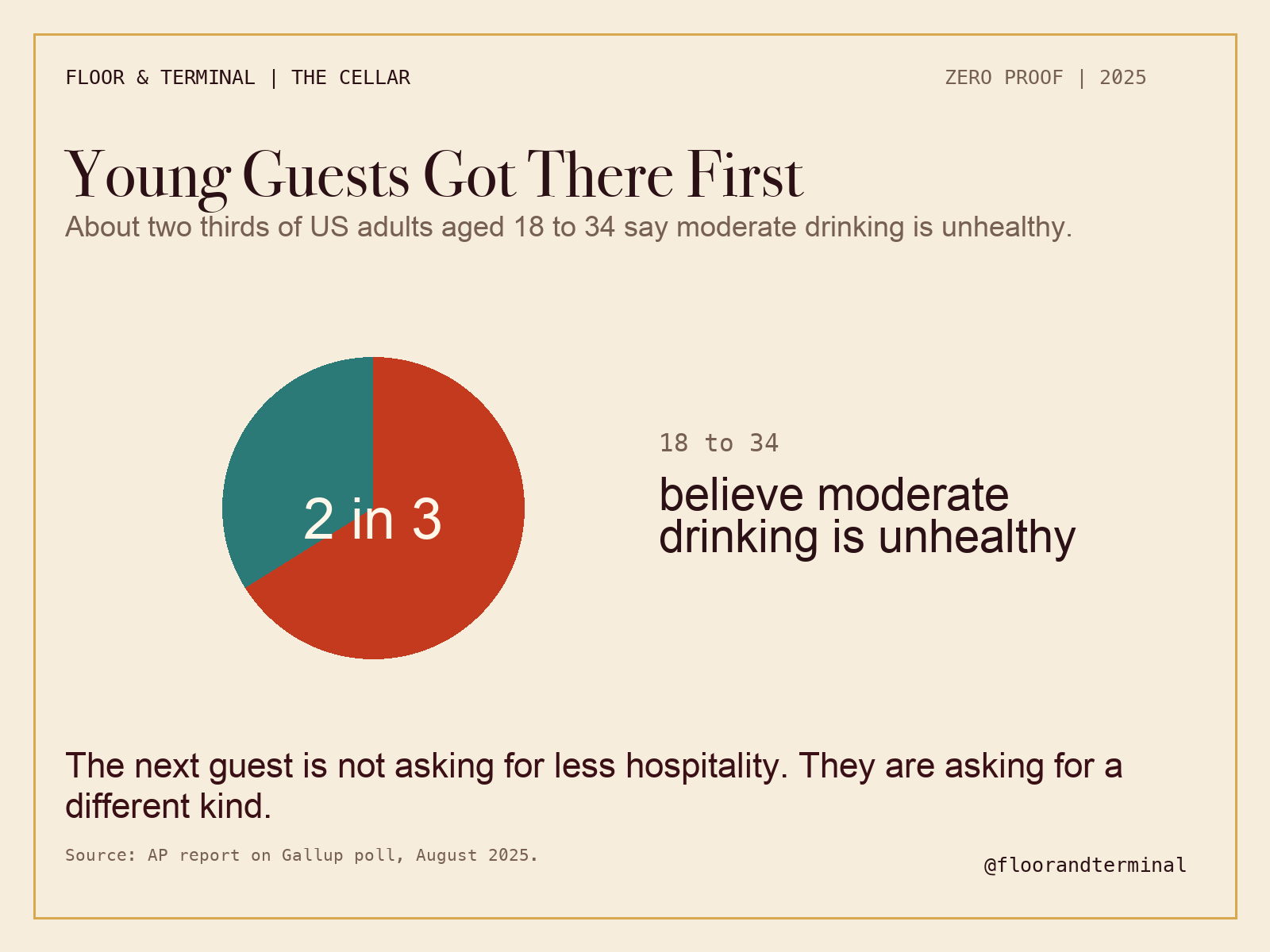
Younger guests are not waiting for permission.
About two thirds of US adults aged 18 to 34 now say moderate drinking is unhealthy, according to the same Gallup reporting.
The next generation of premium guests may still order wine. Many will. But they will order it with a different mental model: less automatic, more intentional, more suspicious of ritual that cannot explain itself.
That does not kill wine.
It kills lazy wine.
It also creates room for a serious zero proof program.
Not a mocktail list.
A program.
There is a difference.
A mocktail list says: here are three sweet things for the person who cannot participate.
A program says: here is acidity, bitterness, texture, temperature, pacing, pairing logic, and a reason to stay in the conversation.
One protects a guest from feeling excluded.
The other protects revenue.
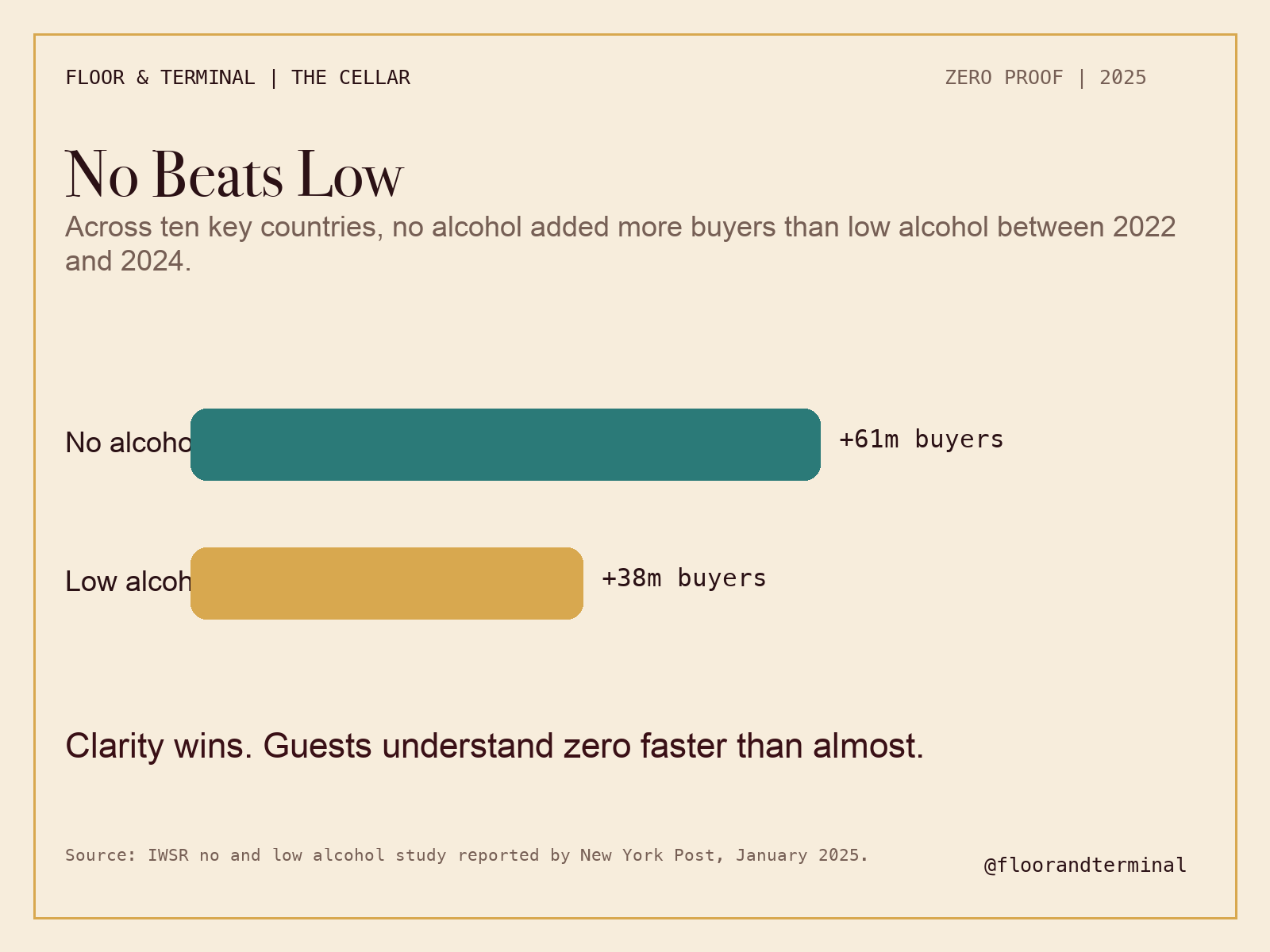
The strongest signal is not low alcohol. It is no alcohol.
IWSR data reported in January 2025 found that no alcohol products added 61 million buyers between 2022 and 2024 across ten key countries. Low alcohol added 38 million.
That makes sense.
Guests understand zero faster than almost.
Low alcohol can be useful, but it asks the guest to do math. Zero proof makes the promise clean.
For restaurants, the opportunity is brutally practical.
A guest who would have ordered water can order something with a margin line.
A guest who would have had one glass can stay in the pairing rhythm.
A table with one non drinking guest no longer has a dead zone in the beverage conversation.
The server gets language. The guest gets dignity. The room gets revenue.
Run the house math.
If a zero proof drink sells for 12 dollars with a 2.50 dollar build cost, that is a 79 percent gross margin before labor and overhead. If it replaces tap water, the check grows. If it replaces a low confidence cocktail, the service gets cleaner. If it keeps one guest engaged through three courses, the program has already done its job.
This is not medical advice.
This is floor advice.
The sober guest is not low value.
A lazy room makes them low value.
The next great beverage program will not be the one that shames alcohol or pretends wine is over.
It will be the one that understands the whole room.
Wine for the guest who wants wine.
Zero proof for the guest who wants presence without the pour.
Language for the server.
Math for the operator.
Taste for everyone.
That is what sobriety is worth.
Reply with the zero proof drink that did not feel like an apology. I am collecting the ones that actually did the job.